Inward tilt and turn or outward casement? A practical comparison of ventilation, sealing, screens, egress and regional conventions.
Key takeaways
- Tilt and turn windows open inward two ways: tilted at the top for secure ventilation, or swung fully for cleaning and egress.
- Casement windows hinge at the side; in North America they usually open outward with a crank and an interior screen.
- Both types seal on compression gaskets with multi-point locking, so both can achieve strong air and water performance.
- Interior clearances, screens, window coverings and local conventions often decide the choice more than performance does.
Specify tilt and turn windows when you want secure ventilation, easy cleaning of both glass faces from inside and large inward-opening sashes, and casement windows when interior space is tight, screens must be on the inside, or the market expects outward-opening crank windows. Both are compression-sealed, multi-point locking designs capable of high air and water performance. The decision usually comes down to how the window interacts with the room, the screen, the window coverings and the code requirements for egress.
How does a tilt and turn window work?
A tilt and turn window uses a single handle to control a perimeter hardware system. With the handle pointing down, the sash is locked. Turned 90 degrees, the sash swings inward on side hinges like a door. Turned 180 degrees, the sash tilts inward from the top, hinged at the bottom, leaving a gap of a few inches at the head for ventilation. The hardware engages locking points around the sash perimeter, pulling it evenly onto the gaskets.
The design is standard in Germany, Austria and much of central and northern Europe and has become common in North American high-performance and Passive House construction, as well as in New Zealand and Australia, where it is valued for secure night ventilation.
How does a casement window work?
A casement window is hinged on one side and swings open like a door. Regional practice varies:
- North America: casements usually open outward, operated by a crank (crank casement) or a push-out handle, with an insect screen fixed on the inside.
- Europe: casements frequently open inward, and French casement pairs open without a central mullion.
- Australia and New Zealand: outward-opening casements and awnings are common, often with friction stays and restrictors.
Outswing casements shed water well because wind pressure pushes the sash against its frame, and when open, the sash can act as a wing that catches breezes moving along the wall.
Tilt and turn vs casement at a glance
| Criterion | Tilt and turn | Casement (outswing, North American style) |
|---|---|---|
| Opening direction | Inward, tilt or turn | Outward |
| Secure ventilation | Tilt position gives ventilation with limited opening | Limited by opening restrictors |
| Cleaning | Both faces from inside | Exterior face reached through the opening with sufficient clearance |
| Insect screens | Outside the sash; fixed, roller or magnetic | Inside, simple fixed screen |
| Interior clearance | Needs space for the sash to swing in | None needed inside |
| Window coverings | Must clear the sash; integrated or recessed blinds work well | No conflict |
| Wind exposure | Sash protected inside the building when open | Open sash exposed to wind gusts |
| Maximum sash size | Large sashes possible with appropriate hinges | Limited by stay or operator capacity |
Which is better for ventilation?
The tilt position gives steady, draft-controlled ventilation that can be left open overnight or when the house is empty, because the gap is small and the sash is still engaged by the hardware. For rapid air exchange, the turn position opens the full sash. Casements excel at capturing breezes, especially outswing models angled into the prevailing wind, and can be opened wide in mild weather. In hot, humid climates where natural ventilation drives comfort, casements and awnings are traditional; in climates where homeowners want to ventilate in winter with minimal heat loss, tilt ventilation is convenient.
How do they compare on air and water performance?
Both types close by compressing sashes onto gaskets, which is inherently tighter than sliding or hung windows that rely on brush seals. Air and water performance depends on the profile design, the number of sealing planes, hardware adjustment and installation. Tilt and turn windows typically use two or three gasket lines and perimeter locking; North American casements often use multi-point locks operated by a single handle. Because the inward-opening sash must be drained by the frame, water management detail in the sill is important for tilt and turn designs. Our thermal break aluminum windows use interior and exterior sealing systems with EPDM gaskets on many series.
Screens and window coverings
Screens are often the deciding factor in North America. An outswing casement takes a simple interior screen. A tilt and turn needs the screen outside, so it must be removed or rolled up for cleaning, unless a retractable or magnetic screen is used. Several of our tilt and turn series offer magnetic or retractable screens.
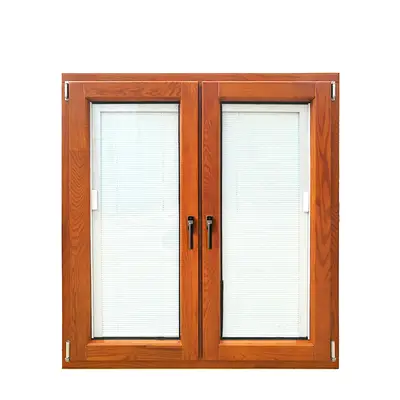
Window coverings also matter. Shades and drapes must not obstruct an inward sash. Solutions include mounting blinds on the sash itself, using blinds between the glass panes, or mounting shades above the window head with clearance.
Egress, safety and child protection
Many codes require an emergency escape and rescue opening in sleeping rooms, with minimum clear opening area, width, height and sill height. Both types can meet egress requirements when sized correctly, because both open fully. Check the clear opening of the specific unit at the hinge side, since hinges and stays reduce it. For child safety, tilt mode provides ventilation without a large opening; for casements, opening control devices limit the opening while allowing release for escape. Requirements vary by jurisdiction, so confirm with your local code.
Which is more secure?
Both can be highly secure when fitted with multi-point locking and reinforced keeps. Tilt and turn windows lock at multiple points around the perimeter and can be fitted with lockable handles. Outswing casement hinges are on the outside face but are concealed when the window is closed. The quality of the hardware matters more than the type; our tilt and turn ranges use German- or European-origin hardware on many series.
Hardware details worth checking
Hardware drives the daily experience of both window types, and it is where low-cost products most often fall short. For tilt and turn windows, check:
- Maximum sash weight for the hinge set. Triple glazed sashes are heavy, and an undersized hinge leads to sagging and poor seal compression.
- Mis-operation device, which prevents the sash being tilted and turned at the same time, a common cause of damage.
- Lift-up or sash-lifter features that guide a large sash back onto its keeps when closing.
- Turn-before-tilt or tilt-before-turn sequence. Tilt-before-turn handles put ventilation first, which is useful for child safety.
- Adjustability at hinges and keeps, so installers can set compression and alignment.
For casements, check the operator or stay rating against sash size and weight, whether the operator folds away neatly, whether the lock is single- or multi-point, and whether the hinge permits cleaning access to the exterior glass. In coastal areas, choose stainless or coated components for both types.
Installation and wall integration
Inward-opening tilt and turn windows are usually set deeper in the wall, often aligned with the insulation layer, and fixed with brackets or screws through the frame. This placement improves thermal continuity and protects the window from weather, but it requires careful detailing of the sill and the air and water barrier. North American outswing casements are commonly installed with a nailing fin against the sheathing, integrated with the weather-resistive barrier by shingle-lapped flashing. Neither approach is better in every wall; the method should match the wall assembly and the installer's training. When ordering imported windows, specify whether you need nail fins, installation brackets or a receptor, and ask for installation details for your wall type.
Cost and market conventions
Tilt and turn hardware is more complex than casement hardware, so tilt and turn units tend to cost more for the same size. Installer familiarity also matters. North American installers are used to nail-fin outswing casements; European installers expect inswing tilt and turn units installed with brackets. When importing, confirm the installation method and accessories with the factory early. Some markets also have conventions on handing, screens and color, and matching these reduces friction with local trades and building inspectors.
How should you choose?
- Choose tilt and turn for high-performance and Passive House projects, cold climates, upper floors where exterior cleaning is difficult, and rooms where secure ventilation is valued.
- Choose casement where interior space is limited, interior screens are expected, or window coverings must remain unobstructed.
- Combine them: tilt and turn in bedrooms and living rooms, casements over kitchen counters and in bathrooms where interior space is tight.
Browse our aluminum tilt and turn and casement windows, the aluminum-clad wood range for warmer interiors, or our slim tilt and turn designs for narrow sightlines. If cold-climate performance is a priority, see our article on double vs triple glazing.
Frequently asked questions
Are tilt and turn windows better than casement windows?
Not universally. Tilt and turn windows offer secure tilt ventilation, inside cleaning and large sashes. Outswing casements need no interior clearance, take interior screens and suit North American conventions. Both seal on compression gaskets with multi-point locks, so performance depends more on product quality than type.
Can you put insect screens on tilt and turn windows?
Yes, but the screen goes on the exterior because the sash opens inward. Options include fixed screens, roller screens and magnetic screens. Retractable or magnetic screens are convenient because they can be moved aside without tools when you want to clean the outside of the glass.
Do tilt and turn windows meet egress requirements?
They can. In the turn position the sash opens fully, so a correctly sized unit can provide the clear opening area, width and height required for emergency escape. Check the clear opening of the specific unit, including the hinge-side reduction, against your local building code.
Are tilt and turn windows suitable for North American homes?
Yes. They are widely used in high-performance and Passive House construction in the US and Canada. Plan interior clearance for the sash, exterior screens and window coverings, and confirm energy ratings, structural performance and installation method meet local requirements before ordering.
Related products